
Video games are a unique art form. Unlike film or TV, which live and die based on their plots or storylines, a video game can be a huge success without the need for a tight script, or professional actors or actresses delivering the performances of their lives.
However, not all games are built the same. While some games are created exclusively with pure gameplay in mind, others are designed to tell an emotional story that prioritizes gameplay as secondary.
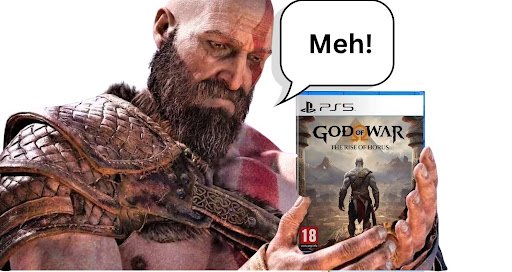
Mock Game credit: x.com
Spec Ops: The Line
Spec Ops: The Line
I played Spec Ops: The Line after seeing a YouTube video Review (which I unfortunately don’t remember) about how it was one of the most unique gameplay experiences, despite its bland gameplay.
I was promised that if I kept pushing forward and reached THAT point, that everything would make sense, and I would consider this one the greatest video games ever made.
So I pick up Spec Ops, play….. And immediately get fatigued by what felt like asinine gameplay. Pop head out, shoot, reload, pop out, shoot, repeat.
Jaime Griesmer coined the phrase “30 seconds of fun.” During development of Halo, Jamie came to the conclusion that if you can develop a loop of 30 seconds of fun, you could stretch that out to be an entire game.
The Moment That Changed Everything
Unfortunately for Spec Ops, there was nothing unique about its 30 seconds of gameplay, and the tedium of Spec Ops gameplay quickly wore thin.
However, despite turning the game off, I knew I would return later when my fatigue subsided and push forward. Then it happened.
I reached THAT point and everything changed. From feeling bored, I suddenly shifted to a sense of dread. Without spoiling a 13-year-old game, I immediately turned off my console and reloaded my last save, desperate to undo the sequence of events I had chosen.
Alas, that’s not how Spec Ops: The Line works, and even though I had no other choice but to continue, I forever carried the sense of guilt for my actions with me through the rest of the game.
But that’s where something interesting happened. From that point forward, what once felt like tedium washed away.
Despite the guilt I felt over all my in-game actions and my wish that things were playing out differently, I was now enjoying my time playing. Why? The gameplay remains the same at the beginning as it does toward the end, but there was a significant shift in my desire to continue playing.
What Spec Ops Taught Me About Games
For me, it’s proof that, unlike a film or television series that needs most of its key elements (Script, acting, direction, etc.) to work in tandem to deliver a memorable experience, video games can work even when certain elements aren’t exactly firing on all cylinders.
While a game like Spec Ops would be lost to the annals of history without those moments due to its tedious gameplay, some of my other favourite games, such as Hollow Knight or Enter the Gungeon, are remembered not because of their incredible storytelling, but because of their fantastic 30-second gameplay loop.
God of War
And that’s where God of War 2018 and its sequel, God of War: Ragnarok, come in. God of War 2018 is undoubtedly one of the greatest masterpieces of all time.
While its story isn’t perfect, I can suspend my disbelief over elements such as Atreus’ convenient “I don’t know I’m a God’ sickness, or how quickly he changes from a kind, innocent boy, to seemingly capable of committing heinous acts with impunity, only to turn back after a brief kidnapping and scolding from his father.
These beats are vital to the story Cory Barlog was trying to tell, about Kratos’ fear that his son would follow in his path.
Why the Gameplay Didn’t Hook Me
While some might disagree, I personally find it hard to believe that the new God of War games’ 30-second gameplay loop is sufficient on its own merits to make them compelling video games.
This was more than evident for me during God of War 2018, with the Musphelheim and Niflheim challenges and gauntlets. I’ve replayed GOW 2018 on 3 separate occasions, (first time directly after completing it, second when I lived in China on my horrible region-locked Chinese PS4, and 3rd as preparation for Ragnarok) and always to 100%.
Each and every time I had to travel to Musphelheim and Niflheim, a part of me would slowly die.
You would think that playing a Video Game is what makes video games great, but I loved GOW 2018, not for its gameplay, but much like Spec Ops, for its story. Once the story element was removed from the game, I found it tedious and boring.
Ragnarok: A Story-First Expectation
So, when GOW: Ragnarok was released, I knew what to expect gameplay-wise… which wasn’t much, because I couldn’t care less (yes, it’s couldn’t care less, not could care less) about the gameplay; I wanted to see how this story unfolded.
I, like many other people, was extremely nervous when it was announced that Ragnarok was going to be the conclusion to the Norse era of GOW games, but I held my breath and hoped that Sony Santa Monica Studios could pull it off. I was elated when all the reviews dropped, and seemingly they had done it!
A masterpiece, “better game than whatever you might imagine,” “an outstanding game that will stand as a beacon for what storytelling greatness should be,” “the best combat of all time, a gripping, poignant, and ambitious story, with so much to do you’ll never want it to end.”
The consensus seems to still be that this is one of the greatest video games of all time…. But is that really true? I remember back in 2012, people were singing the praises of Assassin’s Creed 3 when it first released, and by the time I had finished it, I felt extremely disappointed.
It was only maybe a year later, in 2013, when whispers started to circulate that it wasn’t very good… and later, that it was just outright bad.
Poor storytelling, bland main character, slow to start, and easy combat – while I don’t agree with all the modern criticisms of AC 3, where were these criticisms on launch day?
Assassin’s Creed 3 received an 8.5 from IGN and a similar rating from GameSpot. On Metacritic, there are numerous 100/100, 95/100, or 90/100 reviews, all dating back to its 2012 release.
While there are thankfully some more critical reviews, it makes you wonder, “Are some people just caught up in the hype?”
The Ending That Left Me Cold
Right before the credits started to roll on Ragnarok, I felt dread just like I felt when playing Spec Ops. But this was a different dread.
I can distinctly remember my heart starting to race, with my mind begging, “Please don’t let this be all there is,” and just as that thought passed through my mind, the credits slowly started to rise.
I was in disbelief! I was told this was a masterpiece, the greatest game of all time, a seminal moment in video game history, and all I could think was…. Really? Did these people play the same game I played? Did they pay attention to the story like I did? Or is it that they are just caught up in all the hype?
Sure, some companies are afraid a negative review will cost them access and affect their business, but Raganrok was getting some serious praise from companies and independent reviewers alike.
I’ll be the first to admit that I’m not a video game enthusiast, not in the sense that I don’t love video games – I do – but I don’t live and breathe them like some reviewers might.
I can easily sit here and say, “I appreciate how much work it takes to make a video game,” but do I? I don’t know the first thing about making a game. I don’t actually know if the Ultrahand mechanic from The Legend of Zelda: Tears of the Kingdom is a marvel of ingenuity, I just accept it when someone ‘in the business’ tells me that it is.
I just enjoy video games, without thinking, or to be perfectly honest, caring about what goes into making them.
GOW Ragnarok might well be a marvel of video gaming excellence, but that doesn’t mean anything to me when I finish the game and feel disappointed.
I anticipated Ragnarok and played it for its story, hoping it would stir emotions within me. However, the only emotions it evoked were disappointment and frustration.
Ragnarok’s Story And Pacing
If I list off everything that I didn’t like about Ragnarok’s plot, we would be here all day, ‘Why did Kratos’ blades work for Surtr? Why did the elves stop fighting for Freyr, what happened with the mask subplot, and possibly most importantly, when and why did fate change?
Instead, I’ll focus more on some of the main gripes I have with its plot and why things ended out this way.
It’s very easy for people to point their finger and say, “You’re just mad because you didn’t get what you wanted,” but on the contrary, I didn’t go into Ragnarok with any thoughts of how I wanted the story to unfold; I simply wanted Santa Monica Studios to tell me a surprising story.
GOW 2018’s plot was about fulfilling a dying wife/mother’s wish of spreading her ashes at the highest point in the nine realms; however, the story was about a Father trying to connect with his son and teach him the skills he would need for a life without him.
GoodBlood did a phenomenal video on the story and themes of the game, noting how it focused and contrasted the relationship between Kratos and Atreus, with the relationships between Brok and Sindri, Thor and his sons, and Freya and Baldr. So, while God Of War Ragnarok’s plot was about facing the upcoming Ragnarok… what was its story about?
You can argue that its story is about finding yourself, as Loki is desperate to find out his place in the world. But how does that manifest? Raganrok seems to have tried too much, too quickly, and ultimately lost its emotional focus.
While some might disagree, as they felt an emotional response upon seeing things like Kratos viewing his mural at the conclusion, unfortunately, for me, the moment wasn’t earned.
Ragnarok attempts to weave multiple overlapping plots: the prevention of Ragnarok, Atreus’ discovery of his identity as Loki, the prophecy and fate subplot, the chaos in the nine realms, Odin’s manipulation and schemes, and the reconciliation arcs of Freya & Kratos, Kratos & Atreus, Brok & Sindri, and Thor’s family.
With so many locations, characters, and objectives. There’s no one clear through-line like the ashes journey in GoW 2018. Is it the theme of Fate v Free Will?
Well, that hits a snag when you remember that Faye seemingly had foresight… but now that Norns have told us that fate doesn’t exist, and 2018 might have never happened had Kratos and Atrus just done ‘something’ different!
Is it Atrues’ journey to become Loki? well…..
The Loki Problem
My favourite part of GOW 2018 was how it stayed true to the Mythology, but had its own spin. In Norse Mythos, Freya secured oaths with everything in the nine realms to protect her son, who had visions of his own death.
Having learned that she left mistletoe out, Loki forms an arrow from one and hands it to Baldr’s blind brother, Höðr, who throws it at him, instantly killing him.
While characters like Höðr aren’t present in 2018, it was essential to have the plot be different, yet remain the same, to hit us with the twist that Atreus was, in fact, Loki. But here is one massive issue with Ragnarok. Does Atreus NEED to be Loki? The answer is no.
Atreus, being Loki, recontextualizes his actions throughout GOW 2018: His trickster tendencies, ability to speak to animals, his impulsiveness, and, of course, the mistletoe subplot.
The game adapted mythology to fit its emotional story, rather than simply copying and pasting from the lore, to tell a new and exciting tale that includes the Greek God of War and his impact on the events.
While Ragnarok keeps calling Atreus “Loki,” it doesn’t do much with it. While he fulfills some prophecies, such as birthing Jormungandr (in their own way), these could have been done by “Atreus” without ever using the name “Loki.”
There’s no clear arc of “becoming Loki,” no transformation and no thematic clarity. Loki in mythology is a chaotic force, a catalyst, a shapeshifter.
This doesn’t mean Loki needs to be evil. He could have gone the Asgard and tricked Thor or Odin for the right reason. However, Atreus is… a well-meaning teen with a bow, and his trickster role is completely neutered.
The twist of Atreus being Loki was meaningful because it implied destiny, conflict, and a different future. Ragnarök names him Loki, but fails to show why that identity matters.
It ultimately feels like a gimmick more than a character-defining choice. If you removed the name “Loki” from the story, nothing fundamentally changes.
Tyr: A Mythical Letdown
Tyr was a legendary figure in GOW 2018. Unlike Kratos, who was a bloodthirsty tyrant during his reign as the Greek God of War, Tyr was a God of War who sought peace, unity, and understanding between realms.
He was portrayed beautifully through environmental storytelling, such as murals, relics, and architecture, which painted him as a thoughtful, compassionate, and strategic god.
Tyr wasn’t just another god; he was the God of War Kratos never was, and maybe, one he could become. This framed Tyr as a thematic mirror to Kratos. If Kratos was once the embodiment of rage, Tyr was the god of restraint.
Their eventual meeting in Ragnarök had the potential to be one of the most meaningful moments in the franchise.
While I believed the theories that Kratos would travel through time (because why have time travel at all if you weren’t going to use it?) and become Tyr. I was also fine with having Tyr remain a mythical figure who inspired Kratos to “be better.”
Alas, that isn’t what happened. Having Odin play the role of Tyr isn’t a problem. The problem is when Tyr suddenly appears after the credits roll, and for what? When the real Tyr is discovered, that should be a big deal, right?
Instead, he becomes little more than an optional post-game NPC. He wanders the realms, quietly observing, but never truly engaging with Kratos in any meaningful way. There’s no deep conversation between two gods of war.
No ideological conflict, and no moment where Tyr questions Kratos’ past or offers him guidance. Just… vague mysticism and brief appearances.
GOW 2018 made Tyr feel legendary. He wasn’t just another god; he was the ideal Kratos could aspire to. A pacifist god of war who used diplomacy over blades. A builder of bridges, both literal and metaphorical.
If anyone was meant to challenge Kratos’ philosophy, to push him toward becoming better, it was Tyr.
But in Ragnarök, there is no meaningful interaction between them. No mentor dynamic. No shared reflection on war. Nothing.
It feels like the writers included the real Tyr just to kill the ‘Kratos is Tyr’ theory, which ultimately would have been better than what we got.
It’s not just wasted potential; it’s narrative negligence, especially given how important he was portrayed to be in the previous game.
Conclusion
GOW 2018 told a focused, emotional story that gripped me from start to finish. It was a game that didn’t rely on gameplay alone but delivered something rare — a narrative that stuck with me long after the credits rolled.
Ragnarök, on the other hand, tried to be bigger, louder, and more epic — but in doing so, it lost what made its predecessor special. It juggled too many characters, too many subplots, and too many half-baked themes.
Atreus’ identity as Loki went nowhere. Tyr, once a mythic symbol of what Kratos could become, became an afterthought. And the emotional core that once made this franchise so compelling vanished beneath the weight of its own ambition.
I didn’t need Ragnarök to be perfect. I just needed it to matter. Instead, I finished the game feeling like it said everything, and ultimately nothing.
And that’s why it killed my interest in the franchise.