
What does it actually take to go from zero visibility to real, measurable rankings in just 90 days? That’s the question I get asked most often when people see this SEO case study, and it’s exactly what I want to break down in this post.
I’m going to walk you through the full strategy I used for a client who started with almost no organic presence. There were barely any backlinks worth mentioning, and the site had zero visibility in AI search tools like ChatGPT and Google AI Overviews.
In just 90 days, we turned that around completely. The approach combined content optimization, technical SEO, strategic link building, and an AI/AEO-focused strategy designed to help the site show up in both traditional and AI-powered search.
This isn’t a theory post. Every number in here is pulled directly from the client’s own analytics and Ahrefs data, and I’ll show you the actual charts.
Key Takeaways SEO Case Study 90 Days
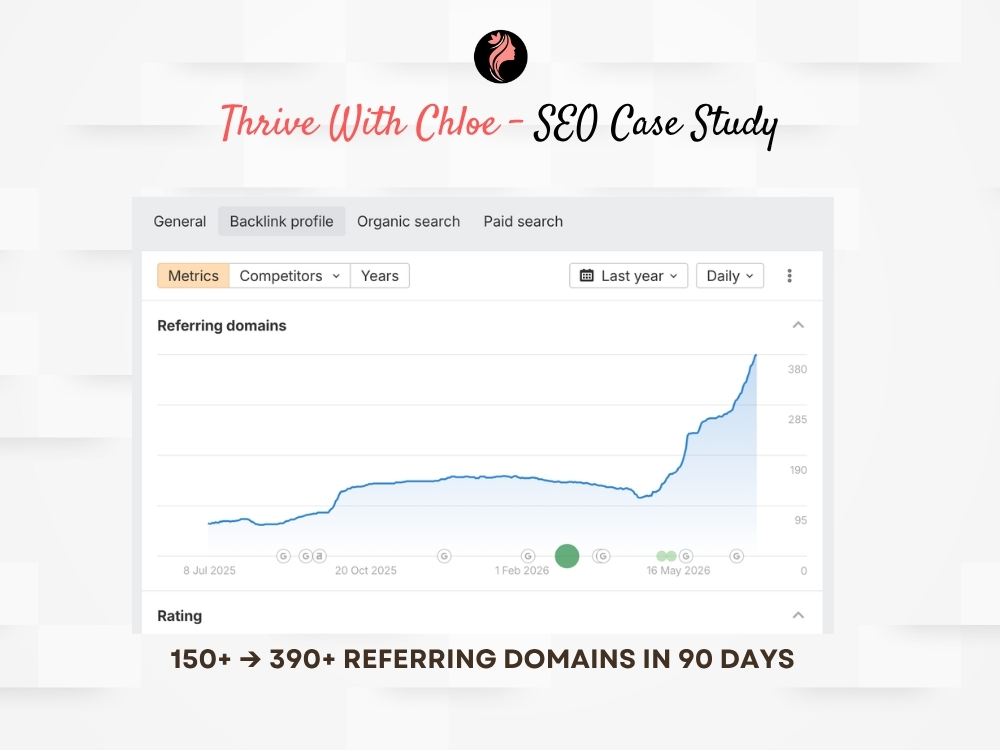
- Referring domains grew from 150+ to 390+ in 90 days through a targeted backlink and local citation strategy.
- Keywords ranking in the top 20 went from 0 to 30+, including several landing in the top 10.
- Organic traffic value rose from $0 to $24/day, and that number is still climbing.
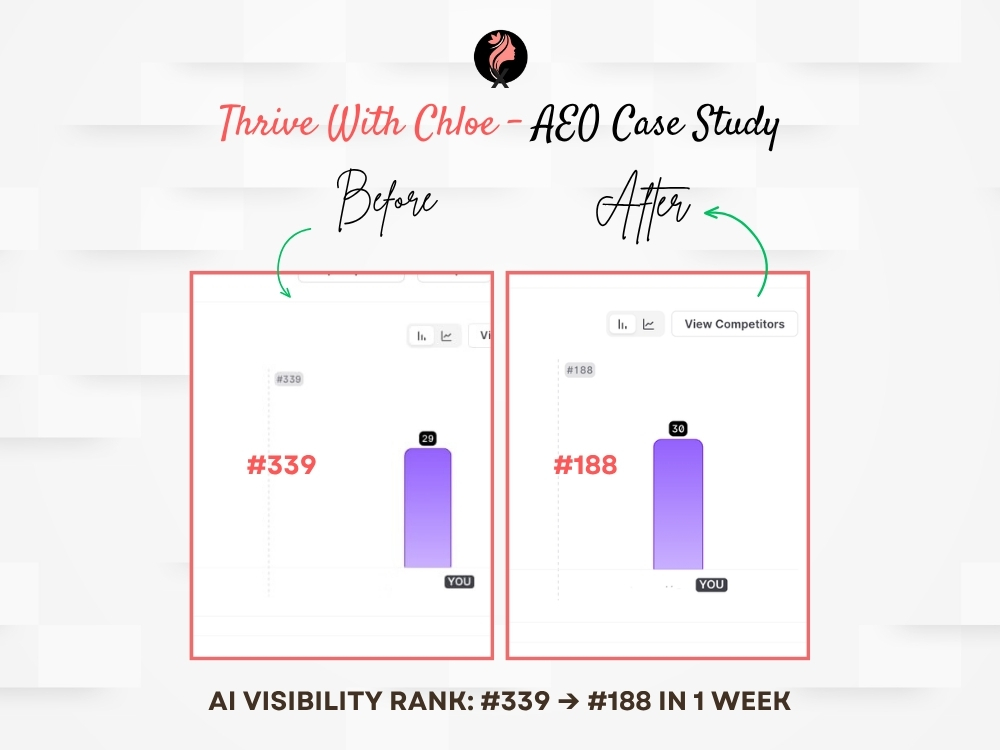
- AI visibility rank improved from #339 to #188 in just one week after optimizing content with SurferSEO for AI/AEO search.
- The single biggest factor behind all of this was starting from scratch with content — there was no existing authority to build on, so every win came from the ground up.
- A combined SEO + AEO approach (optimizing for both Google and AI search engines) is quickly becoming non-negotiable, not optional.
The Starting Point: Zero Content, Zero Authority
When I took on this project, the client had almost nothing to work with. No meaningful backlink profile, thin or outdated content, no local landing pages, and several technical SEO issues that were quietly working against them in the background.
On top of that, they were going up against much bigger, more established competitors already dominating the search results for the exact keywords they needed to rank for.
This is honestly one of the harder situations to work with in SEO. It’s a lot easier to optimize a site that already has some authority and just needs refinement.
Starting from zero means every single piece of content, every backlink, and every technical fix has to pull real weight — there’s no existing momentum to lean on.
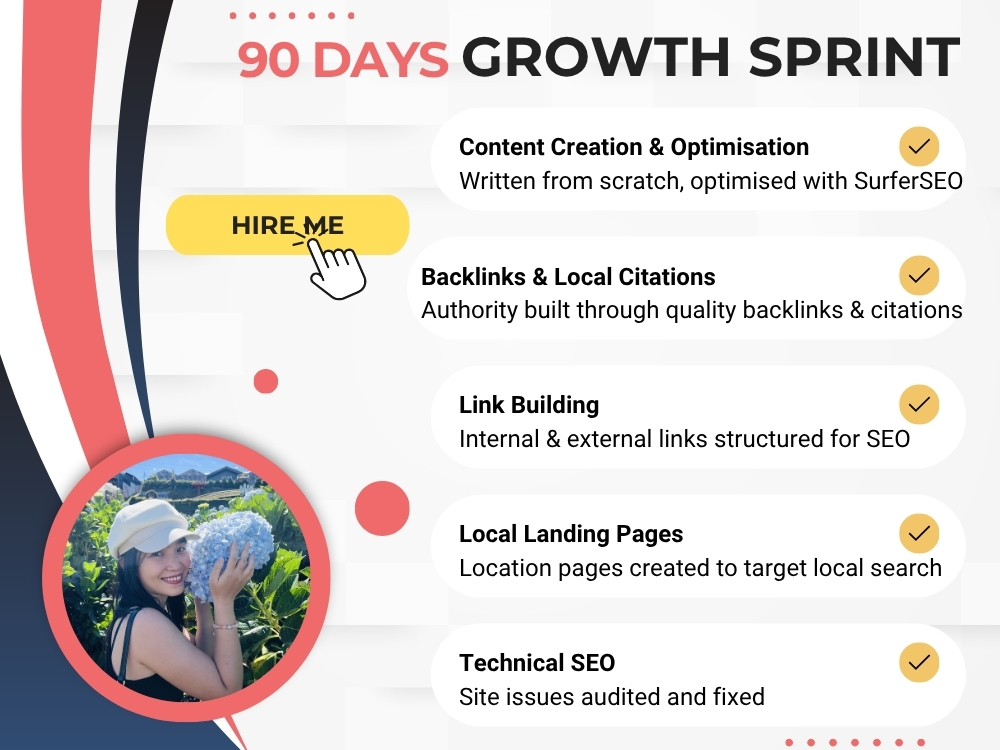
So instead of trying to do a little bit of everything, I built a focused 90-day plan around five core pillars.
The Strategy SEO Case Study 90 Days: What I Actually Did
1. Content Creation & Optimization with SurferSEO
Since there was barely any usable content on the site, I started from scratch.
Every page was written with a clear target keyword and entity map in mind, then run through SurferSEO to make sure it was structurally optimized — not just “keyword stuffed,” but genuinely aligned with what’s actually ranking for that query.
I aimed for a SurferSEO content score of 90+ on every page, but the real goal was always readability first — content that scores well and reads naturally for a human.
2. Backlinks & Local Citations
Content alone doesn’t rank a site with zero authority. In parallel with the content work, I built out a backlink and local citation strategy — getting the business listed accurately and consistently across relevant local directories, and earning backlinks from relevant, quality sources rather than chasing volume.
3. Internal & External Link Building
Once new content and backlinks started coming in, I made sure the internal linking structure supported it — connecting new pages to relevant existing ones, and vice versa, so authority flowed properly through the site instead of pooling on just the homepage.
External link building continued alongside this to keep building topical authority.
4. Local Landing Pages
Because this client relies heavily on local search intent, I built out dedicated local landing pages targeting specific service areas.
This is one of the most underrated SEO tactics for local businesses — generic homepage optimization rarely competes well against dedicated, location-specific pages that directly match what someone nearby is actually searching for.
5. Technical SEO Fixes
Finally, I ran a full technical audit and fixed the issues that were quietly capping the site’s potential — things like crawlability problems, missing schema markup, slow load times, and indexing issues.
Technical SEO doesn’t get the same attention as content or backlinks, but if it’s broken, none of the other work matters as much as it should.
The Results SEO Case Study 90 Days
Here’s where it gets fun — the actual numbers.
Organic keyword rankings went from essentially flat to over 30 keywords ranking in the top 20, with a strong chunk landing in the top 10.
Organic traffic value followed the same trajectory — flat for most of the timeline, then a sharp, sustained climb starting in the final weeks of the project.
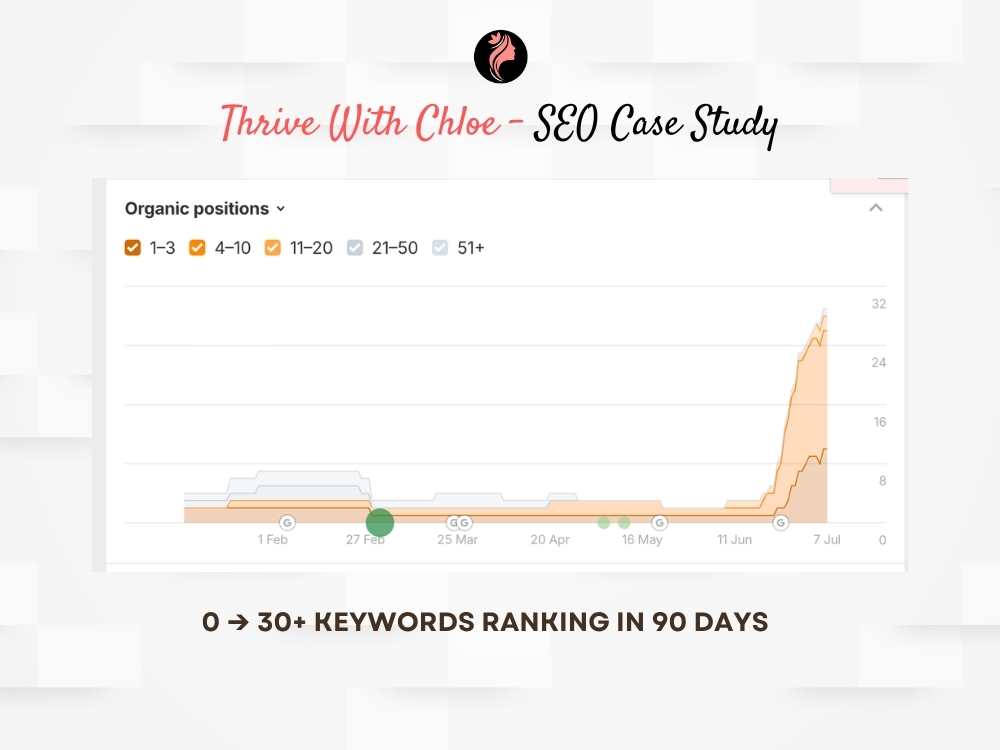
What I find most interesting about this data isn’t just that the numbers went up — it’s how they went up. Nothing moved for the first two months. Then, almost all at once, everything spiked.
That’s a pattern I’ve seen before with sites starting from zero authority: search engines (and increasingly, AI search tools) seem to need a certain threshold of consistent signals — content quality, backlinks, technical health — before they start trusting a site enough to rank it.
Once that threshold is crossed, growth compounds fast.
If you’d rather skip the guesswork and hand it off, I offer SEO & AEO optimisation services on Upwork — content, backlinks, and technical SEO that gets real results.
Why AEO (AI Search Optimization) Mattered Just as Much as SEO
This is the part of the case study I think most people are sleeping on right now.
Google rankings are still critical, but a growing share of search behavior is happening inside AI tools like ChatGPT and Google AI Overviews.
If your content isn’t structured in a way these tools can easily parse and cite, you’re invisible in an entire channel that’s only going to keep growing.
For this project, I specifically structured content with AEO (AI Search Optimization) in mind — clear headers, direct answers to likely questions, and well-organized information that’s easy for an AI model to extract and summarize.
The result: the client’s AI visibility rank improved from #339 to #188 in just one week, and their AI visibility score started closing the gap on much bigger competitors, including Microsoft and Accenture, in the same market.
That’s the real takeaway here: SEO and AEO aren’t two separate strategies anymore. The sites that treat them as one integrated approach are the ones pulling ahead right now.
What I’d Tell Anyone Starting From Zero
If you’re working with a site that has little to no existing authority, here’s what I’ve learned from this project (and others like it):
- Don’t spread yourself thin. Pick your core pillars — content, backlinks, technical health — and execute all of them well rather than doing a dozen tactics half-heartedly.
- Expect a slow start. If your site has zero authority, don’t panic if nothing moves for the first few weeks. That doesn’t mean it’s not working.
- Content quality still wins, but only if it’s structured properly for both traditional and AI search.
- Technical SEO is not optional. No amount of great content will save a site that search engines can’t crawl or trust.
- Track AI visibility now, even if it feels early. The tools and metrics for this are still maturing, but the businesses paying attention today will have a real head start.